

Why was Mahatma Gandhi’s Portrait on Indian Banknotes ? The story behind it.
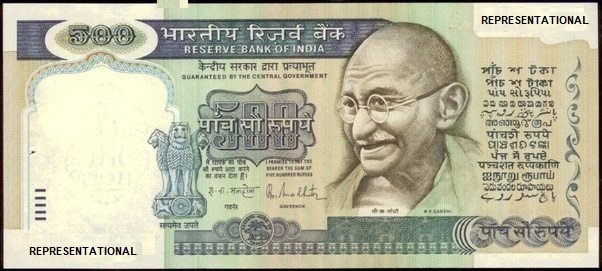
Mahatma Gandhi’s portrait has become one of the most recognizable symbols on Indian currency. For millions of Indians, the image of Gandhi on a banknote is part of everyday life, appearing on notes used for everything from buying groceries to conducting major business transactions. But the story behind how his portrait came to appear on Indian banknotes is closely connected with India’s history, the development of its currency system, and the Reserve Bank of India’s efforts to give Indian notes a distinct national identity.
From Colonial Currency to Independent India
Before India gained independence in 1947, Indian banknotes were issued under the British colonial monetary system. Portraits and symbols associated with the British administration appeared on the currency.
After independence, India gradually began developing a currency identity reflecting its own history and cultural heritage. In the early decades, Indian banknotes featured national symbols and important figures from India’s history and heritage rather than using portraits of political leaders as a general design principle.
Gandhi, who played a central role in India's freedom movement, eventually became the most prominent individual represented on Indian currency.
Gandhi First Appeared on a Note in 1969
A significant milestone came in 1969, when the Reserve Bank of India issued a special commemorative ₹1 note featuring Mahatma Gandhi. The note was released to mark the centenary of Gandhi’s birth.
The commemorative design showed Gandhi in a seated pose at the Sevagram Ashram, along with his famous round spectacles and other elements associated with his life. This was an important departure from earlier Indian currency designs.
However, Gandhi's portrait did not immediately become a permanent feature on India's regular banknotes.
The Famous Gandhi Portrait
The familiar portrait that Indians recognize today was introduced much later.
In 1987, Gandhi's portrait appeared on the ₹500 banknote. This marked the beginning of his portrait becoming a regular feature on Indian currency.
The portrait was not simply a drawing created specifically for the banknote. It was based on a photograph of Gandhi taken by photographer Margaret Bourke-White in 1946.
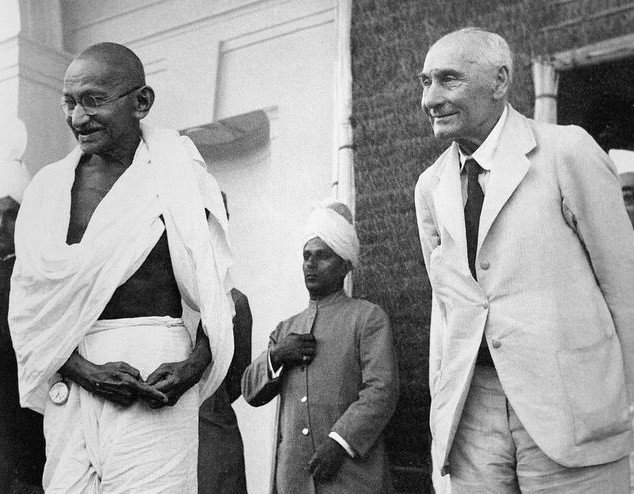
The photograph shows Gandhi seated near a spinning wheel, an object strongly associated with his philosophy of self-reliance and India's freedom struggle. For the currency design, the portrait was adapted and engraved to meet the technical requirements of banknote printing.
The Mahatma Gandhi Series
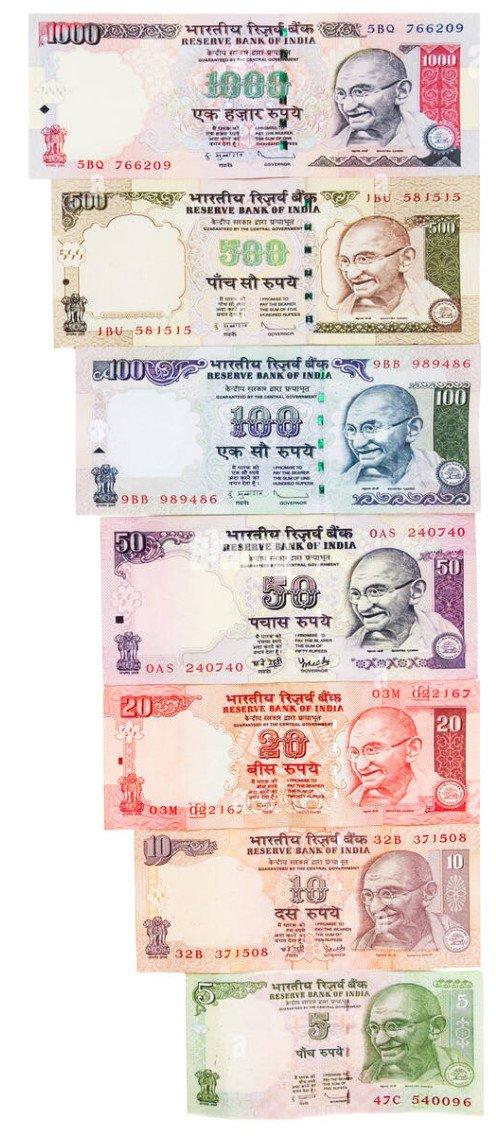
The use of Gandhi's portrait expanded considerably with the introduction of the Mahatma Gandhi Series of banknotes in the 1990s.
The first notes of this series were issued in 1996. Gandhi's portrait appeared on the front of denominations including ₹10, ₹20, ₹50, ₹100, ₹500 and ₹1,000.
The series incorporated several security features designed to make counterfeiting more difficult. These included security threads, watermarks, latent images and other features that evolved over time.
Gandhi's portrait thus became closely associated with the identity of Indian banknotes.
Why Was Gandhi Chosen?
Gandhi's image on Indian currency has both historical and symbolic significance.
He is internationally associated with India's independence movement and the philosophy of non-violence. His political and social campaigns played an important role in India's struggle against British rule.
His image also represents several ideas that became strongly associated with his public life:
Non-violence and peaceful resistance
Truth and ethical conduct
Self-relianc
Simplicity
Social reform
India's freedom struggle
The decision to use Gandhi's portrait therefore gave Indian currency a recognizable national symbol connected to the country's modern history.
The 2016 Mahatma Gandhi New Series
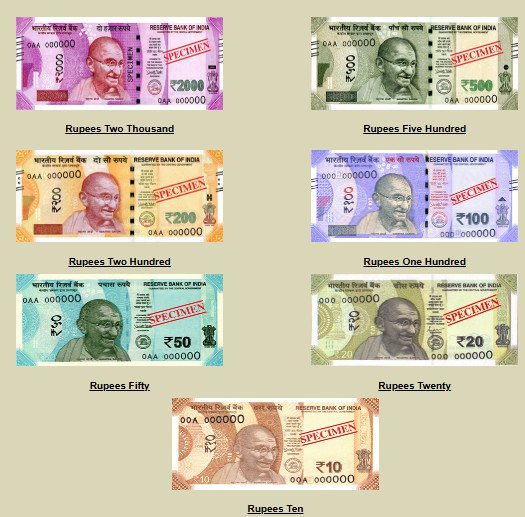
Following India's 2016 demonetisation, the Reserve Bank of India introduced a new banknote design known as the Mahatma Gandhi (New) Series .
The new notes retained Gandhi's portrait but introduced substantially redesigned layouts and additional security features. The notes also incorporated themes representing India's cultural heritage and development.
Different denominations received different colours and motifs. For example, the new ₹500 note was redesigned, while a new ₹2,000 denomination was introduced at the time.
The new series demonstrated that Gandhi's portrait was not merely a feature of an old design—it had become an enduring element of India's modern currency identity.
Is Gandhi on Every Indian Banknote?
Not necessarily.
Gandhi's portrait is used on the regular banknotes of the Mahatma Gandhi and Mahatma Gandhi New Series, but India has also issued commemorative and special notes with different designs. Moreover, the presence of Gandhi's portrait does not mean that every denomination or special issue follows exactly the same design.
The Reserve Bank of India periodically changes banknote designs and security features as part of its currency-management responsibilities.
A Portrait Seen by Billions
Perhaps the most remarkable part of the story is how an ordinary photograph of Gandhi was transformed into one of the most familiar images in India.
Every day, people across the country handle banknotes bearing his portrait. The image appears in markets, shops, banks, businesses and households. Over time, it has become more than a currency design element—it has become a visual reminder of one of the most important figures in India's modern history.
Conclusion
The story of Mahatma Gandhi's portrait on Indian banknotes is a story of history, national identity and evolving currency design. Gandhi first appeared on an Indian banknote in commemorative form in 1969, and his portrait later became part of regular currency beginning with the ₹500 note in 1987. It was subsequently incorporated into the Mahatma Gandhi Series and later the Mahatma Gandhi New Series.
Today, Gandhi's portrait remains one of the defining visual features of Indian currency. Each banknote carrying his image connects everyday economic transactions with a significant chapter in India's journey from colonial rule to an independent republic.

Sr. Reporter









Comments (0)