










Indian Advanced Mission: Sudharshan Chakra Defense System
India's "Sudarshan Chakra" Mission is a future, integrated, multi-layered air defence system, aiming to create an indigenous shield using advanced tech like AI, satellite surveillance, and directed energy weapons
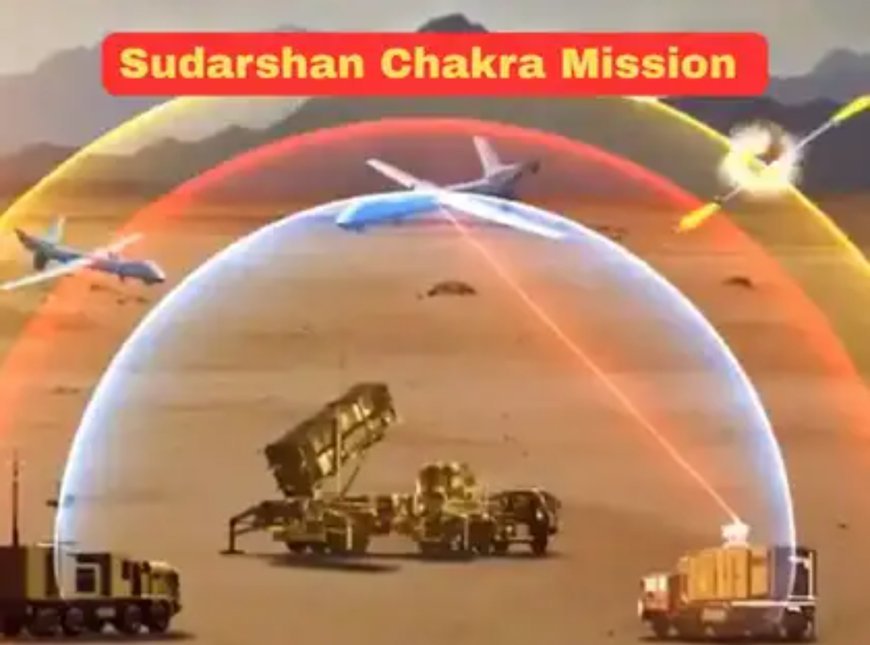
India's "Sudarshan Chakra" Mission is a future, integrated, multi-layered air defence system, aiming to create an indigenous shield using advanced tech like AI, satellite surveillance, and directed energy weapons to protect key assets from all aerial threats (drones, missiles, hypersonic targets) by combining Army, Air Force, and Navy capabilities into one networked system for total self-reliance and deterrence.
What it is:
A Shield & Sword: Described as the "mother of all air defence systems," it's a comprehensive network for both defense and offense.
Integrated Network: Merges land, sea, and space-based sensors (radars, satellites) with command centers and weapon systems (missiles, lasers).
Indigenous Focus: Emphasizes Made-in-India technology, including DRDO's advancements in lasers and VSHORADS.
Key Components & Technologies:
Sensors: Over 7,000 radars and extensive satellite surveillance (50+ satellites by 2030).
Weapons: Includes Directed Energy Weapons (lasers) and missile systems like the Integrated Air Defence Weapon System (IADWS).
AI & Big Data: Uses Artificial Intelligence, Big Data, and Large Language Models for real-time threat analysis and response.
Multi-Domain: Covers air, land, sea, and space for comprehensive surveillance and interception.
Goals & Capabilities:
Total Protection: Safeguards strategic sites, civilian areas, and public places.
Threat Coverage: Countering drones, UAVs, hypersonic missiles, and traditional aerial threats.
Self-Reliance: Boosts India's capability to independently handle modern warfare.
Deterrence: Creates a strong deterrent against aggression through combined offensive and defensive postures.
How it Works (Conceptual Demo):
Detection: Satellites and land/sea radars detect an incoming threat (e.g., a swarm of drones or a hypersonic missile).
Tracking & Fusion: Data from all sensors is fed into an AI-powered command center, creating a unified picture.
Decision: The system automatically identifies the threat type and selects the best response.
Interception: Simultaneously, laser systems engage close targets (drones), while missile launchers (like IADWS) intercept larger threats, providing overlapping layers of defense.
What is Mission Sudarshan Chakra
Mission Sudarshan Chakra is a bold, long-term Indian initiative unveiled by Narendra Modi (on 15 August 2025) — aiming to build a **comprehensive multi-layered air & missile defence shield** for India, covering air, land, maritime and even space-based threats.
The goal: by ~2035, to have a nation-wide defence “shield and sword” — not only to intercept and neutralise incoming threats (aircraft, drones, missiles), but also to enable precision counter-strikes when needed.
It reflects a push for indigenous capability: research, development and manufacturing inside India (part of the broader “Aatmanirbhar Bharat” drive).
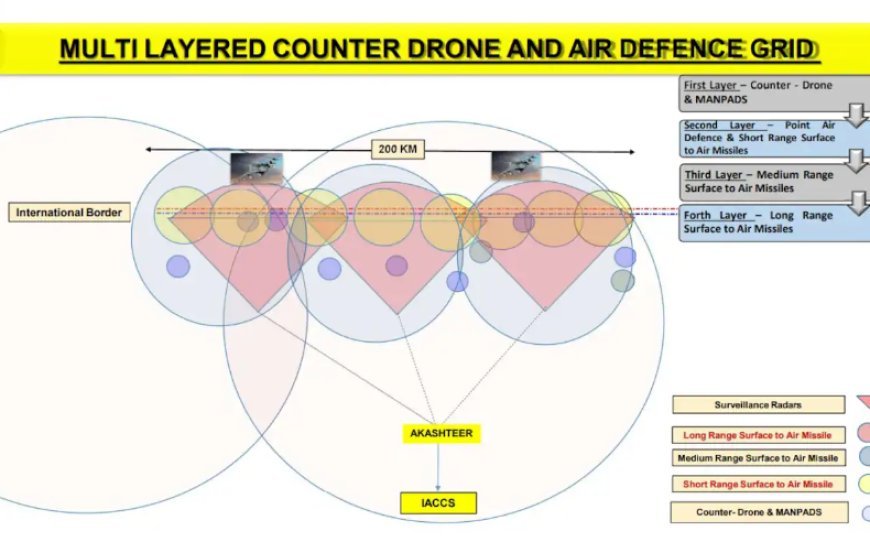
How It’s Structured: Multilayer Defence Architecture
Mission Sudarshan Chakra isn’t a single missile or radar — it’s a networked system combining many kinds of sensors, weapons and command-control infrastructure, arranged in overlapping layers.
Outer Layer (Long-range / Early Warning & Interception)
Under a sub-programme Project Kusha, India plans long-range surface-to-air missiles (LR-SAMs) — with three interceptor variants:
M1: ~150 km engagement range
M2: ~250 km
M3: ~350–400 km — to engage high-range threats.
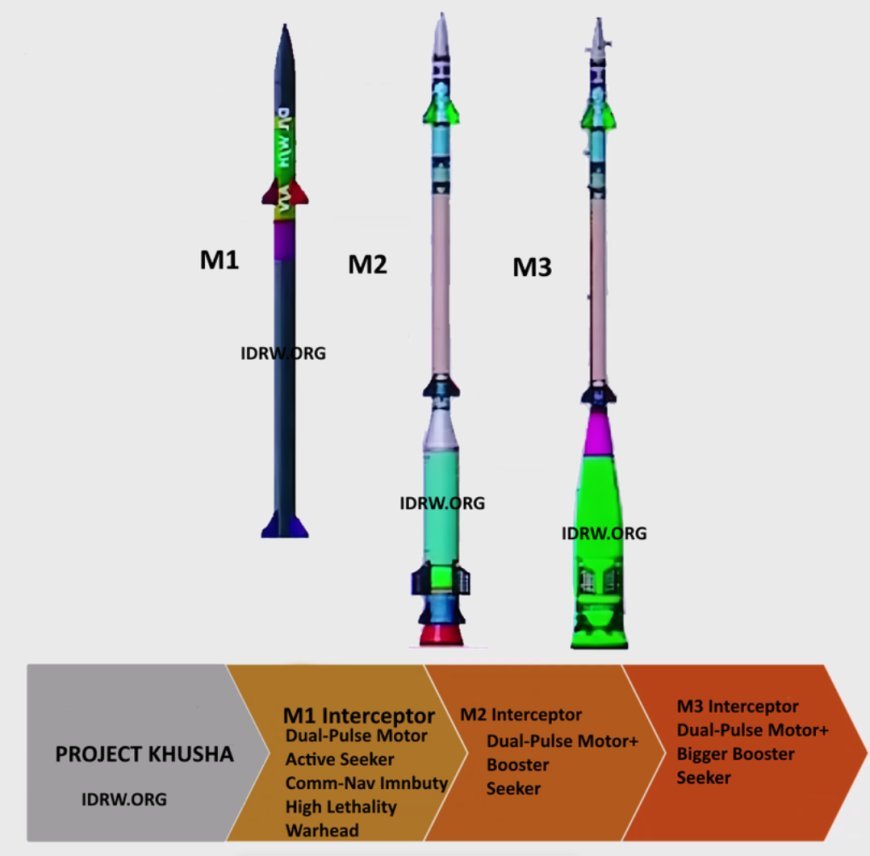
These long-range interceptors will be supported by a vast sensor network: around 6,000–7,000 radars, including “over-the-horizon” radars that can detect targets deep inside enemy territory.
Also planned: satellites for space-based surveillance, enabling detection of threats early, even beyond radar horizon.
Middle / Intermediate Layer
Existing systems like the Russian-made S-400 Triumf — which India designates under the same name “Sudarshan Chakra” in service — form part of this middle layer. This system offers detection and engagement at ranges up to ~400 km.
Medium-range missiles and air-defence guns (for aircraft, missiles, drones) will also contribute here.
Inner / Terminal Defence Layer (Short-Range, Point Defence)
Shorter-range systems — such as quick-reaction surface-to-air missiles (QRSAMs), short-range air defence (SHORADS or VSHORADS), and mobile air-defence guns — will protect critical installations, civilian infrastructure and high-value targets (airports, power plants, cities, etc.) at 0–30-45 km ranges.
This layer also handles low-flying threats: drones, cruise missiles, small aircraft, etc., which often evade long-range radars or missiles.
Advanced & Future-Tech Layer: Directed Energy, AI, Integration
The system plans to incorporate directed-energy weapons (DEWs)— laser or energy-based systems — for “soft-kill” / rapid neutralisation of threats like drones, saturation missile attacks, or swarms.
All these layers and sensors — radars, satellites, missiles, guns, DEWs — will be connected through a centralised command & control network, using advanced radar tech (e.g. AESA), AI-enabled decision support, data analytics, and real-time ISR (Intelligence, Surveillance, Reconnaissance) integration across land, air, sea and space.
What It Aims to Achieve — Capabilities & Objectives
Comprehensive protection: From high-altitude ballistic missiles to low-flying drones; from long-range threats to point-defence near cities and strategic assets.
Early detection and pre-emptive interception: With satellites + radars + long-range missiles, threats can be identified far outside Indian airspace and neutralised before they reach critical areas.
Multi-layer redundancy: Even if one layer fails (e.g. long-range interceptor misses), shorter-range defences or energy weapons offer fallback protection.
Deterrence & retaliation capability: Not purely defensive — the architecture allows for precision strikes back (counter-offense), giving strategic deterrence against adversaries.
Self-reliance in defence technology: By building much of the system indigenously (radars, missiles, DEWs, command systems), reduces dependency on foreign suppliers.
Scalability & flexibility across domains: Air, sea, land, space — the system’s architecture is meant to be modular and expandable as threats evolve (e.g. hypersonic missiles, drones, space-based surveillance).
Challenges & What’s Still TBD
Integration: Combining thousands of radars, satellites, missile systems, DEWs, and command-control — seamless integration (communication, latency, coordination) is a huge technical and logistical challenge.
Timelines: While Project Kusha’s missiles (M1/M2/M3) are slated for testing starting 2026, full-scale deployment of the entire shield may take years (target ~2035) for nationwide coverage.
Cost and maintenance: Operating and maintaining a multi-layered network with satellites, radars, energy weapons, interceptors, etc. will require sustained investment and technological upkeep.
Evolving threats: Adversaries may use new tactics (stealth, electronic warfare, hypersonic missiles, low-signature drones), meaning the system must evolve continually.
Why Sudarshan Chakra Matters
Mission Sudarshan Chakra represents a shift in defence thinking for India:
From relying on a handful of systems (missiles, radars) to building a holistic, layered, resilient and intelligent air-defence architecture. It aims to ensure that no matter how sophisticated or numerous the threats — missiles, jets, drones, space-based weapons — India has a protective shield and also the capability to retaliate intelligently.

If successfully implemented, it could become one of the most advanced integrated defence networks in the world — giving India strategic deterrence, stronger protection for critical infrastructure and citizens, and enhanced self-reliance in defence technology.